Desconegut's avatar

Quant a NACIONALITATS & POLÍTICA

Blog del Grup de Recerca en Estudis Nacionals i Polítiques Culturals (GRENPoC), adscrit al Grup de Recerca en Estudis Polítics, les Identitats, les Institucions i la Corrupció (GREPIIC)

Artur Mas: “Mehr Europa, mehr Katalonien”. Die Fragen stellte Leo Wieland

MasHerr Ministerpräsident, wie geht es Katalonien, wie geht es Spanien und wie geht es Katalonien in Spanien?

Katalonien hinkt, Spanien auch und Katalonien in Spanien ist in Erwartungshaltung. Aber obwohl die wirtschaftliche Lage sehr schwierig ist, glaube ich, dass sowohl Katalonien als auch Spanien das Blatt wenden können. Dies ist nicht Griechenland. Unsere Lage ist auch besser als die Italiens. Wenn man also die Dinge, die nötig sind, entschlossen anpackt, dann, so bin ich überzeugt, finden wir eine Lösung.

Sie regieren seit einem Jahr mit schmerzhaften Maßnahmen, um Defizit und Schulden unter Kontrolle zu bringen. Was haben Sie gelernt, das die neue Zentralregierung unter Ministerpräsident Rajoy noch lernen muss?

Mein Motto war vom ersten Tag an: Man muss für die nächsten Generationen und nicht die nächsten Wahlen regieren. Vielleicht wird man paradoxerweise auf diese Art trotzdem Wahlen gewinnen. Unsere Erfahrung im Jahr 2011 war da sehr positiv. Trotz aller harten, scheinbar unpopulären Entscheidungen und wider alle Kritik und Demonstrationen, haben wir (die bürgerliche Regierungspartei Convergència i Unió) zuletzt sowohl noch die Kommunalwahlen gewonnen, als auch bei den nationalen Wahlen am besten abgeschnitten. Es gibt demnach eine schweigende Mehrheit, die versteht, was wir tun.

In Spanien herrscht mit 23 Prozent Arbeitslosigkeit und in Katalonien mit 20 Prozent noch immer ein bemerkenswerter sozialer Friede. Woran liegt das?

Die offiziellen Statistiken stimmen hier nicht mit der Wirklichkeit überein. Ein Politiker sollte das nicht sagen, aber die Arbeitslosenzahlen sind aufgeblasen. Aus zwei Gründen: Viele Spanier arbeiten in der Schattenwirtschaft, wahrscheinlich mehr als im übrigen Europa. Und es gibt Kollektive, die mitgezählt werden, obwohl sie gar keine Arbeit mehr suchen, wie zum Beispiel Frührentner. Sie beziehen zwar noch Arbeitslosengeld, halten aber nicht mehr nach einem Job Ausschau. Also kann man ruhig etwa fünf Prozentpunkte abziehen. Trotzdem ist das Problem noch gravierend genug. Aber Spanien hat in den letzten 20 Jahren einen ausreichend soliden Sozialstaat aufgebaut, um die Auswirkungen dieser Krise aufzufangen.

Woher sollen nun das Wachstum und die neuen Arbeitsplätze kommen?

Die künftigen Arbeitsplätze werden weder aus der öffentlichen Verwaltung noch von den multinationalen Konzernen kommen. Sie kommen, wenn sie kommen, vor allem in Katalonien, in kleinen und mittleren Betrieben. Was die Sektoren angeht, so werden sie aus der Exportindustrie, einer gewissen Reindustrialisierung durch die Rückkehr von Betrieben, die gegenwärtig im Ausland produzieren, und aus der Serviceindustrie, vor allem dem Tourismus kommen. Wir hatten hier 2011 ein Rekordjahr.

Ist Katalonien, die reichste der großen Regionen, noch der Dynamo der spanischen Wirtschaft?

Zu einem guten Teil schon. Die katalanische Wirtschaft bringt noch immer ein Fünftel der spanischen auf die Waage. Katalonien und die Region Madrid, mit jeweils rund sieben Millionen Einwohnern, sind die beiden wichtigsten Lokomotiven. Katalonien ist aber industrialisierter und exportorientierter und deckt damit rund 23 Prozent seines Bruttoinlandsproduktes ab. Im Falle Madrids sind es nur elf Prozent.

An diesem Mittwoch treffen Sie zum ersten Mal in Madrid mit Rajoy zusammen. Was wollen Sie von ihm, was wird er von Ihnen wollen?

Es wird eine erste tastende Begegnung sein. Ich werde ihm sagen, dass meine Regierung bereit ist, große Strukturreformen, zum Beispiel auf dem Arbeitsmarkt durchzusetzen und eine Politik der Sparsamkeit zu betreiben. Das ist kein Blankoscheck, aber wir wollen hier mit der Zentralregierung kooperieren. Im gleichen Sinn will ich mit ihm über die Stimulierung von Wirtschaftswachstum in Europa sprechen. Manche Partnerländer, Deutschland vorneweg, sind da sehr zurückhaltend. Und dann ist da die katalanische Agenda.

Worum geht es da?

Um die Steuerhoheit. Wir wollen die gleiche Souveränität, wie sie das Baskenland hat. Man kann nicht für die Ausgaben, aber nicht für die Einnahmen verantwortlich sein. Bei letzteren sind die meisten autonomen Regionen komplett von Madrid abhängig. Dort wird über die Steuern entschieden und uns schickt man dann eine Überweisung. Ich will hier volle Entscheidungsfähigkeit.

Ist dies die richtige Zeit für Veränderungen, die die Einheit Spaniens berühren?

Wir haben ein klares Ziel. Wir wollen mehr Europa und mehr Katalonien. Das bedeutet mehr politische Macht in Europa und mehr politische Macht zuhause. Kurzfristig ist das sicherlich nicht möglich. Aber es ist absolut nötig. Wenn wir uns Europa in 20 Jahren vorstellen, so müssen die Regionen und lokalen Bürger mehr Gewicht bekommen. Es hat keinen Sinn, dass die Zentralstaaten immer mehr Einfluss haben. Wir wollen unsere Souveränität nicht mit Madrid teilen. Wir wollen sie für uns haben.

Wie denken die sieben Millionen Einwohner Kataloniens darüber?

Es gibt kein ganz klares Panorama, aber eine interessante Entwicklung. Immer mehr Leute sind für die Souveränität. Das heißt nicht notwendigerweise die Unabhängigkeit. Im interdependenten Europa ist schon niemand mehr unabhängig, siehe Griechenland. In Katalonien sind jedoch immer mehr Leute für einen eigenen Staat. Dieser könnte dann mit Spanien eine Föderation oder Konföderation bilden. Das Gefühl ist, wir brauchen diesen eigenen Staat, um voranzukommen. Es geht nicht darum, mit Spanien zu brechen. Es geht mehr um eine Emanzipation. Kinder, wenn sie erwachsen werden, wollen nicht mit ihren Eltern brechen, aber in ihrem eigenen Haus wohnen. Noch ist das in Katalonien nicht die vorherrschende Strömung, aber doch etwa zu fünfzig Prozent mit zunehmender Tendenz.

Ist Schottland für Sie ein Modell?

Es gibt einige Ähnlichkeiten. Aber das Vereinigte Königreich ist nicht Spanien und Katalonien nicht Schottland. Katalonien hat weit mehr Gewicht in Spanien als Schottland in Großbritannien. Katalonien hat eine sehr gemischte Bevölkerung, Schottland weniger. Aber Großbritannien hat eine viel solidere und liebenswürdigere Demokratie als Spanien.

Warum hat Katalonien den Stierkampf verboten, erlaubt aber weiter die Stierhatz („correbous“) bei Volksfesten?

Wir haben die Corrida nicht aus Identitätsgründen verboten, sondern aus Respekt vor den Tieren. Der Stierkampf wurde in Katalonien ohnehin immer schwächer und war schließlich vor allem nur noch auf den Tourismus ausgerichtet. Bei den „correbous“ im Ebrodelta wird außerdem der Stier nicht getötet. Das ist schon ein großer Unterschied.

Per accedir a la traducció catalana de l’entrevista de Leo Wieland, corresponsal del Frankfurter Allgemeine Zeitung, al president Artur Mas, cliqueu aquí.

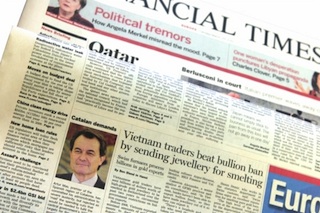
“Catalunya reclama un nou acord amb Espanya”, entrevista de Victor Mallet al president Artur Mas

Segons declaracions d’Artur Mas, president del Govern català, Catalunya reclamarà enguany un nou acord econòmic amb l’Estat espanyol, el qual hauria de dotar la Generalitat de més autonomia financera i reduir els diners catalans transferits a d’altres territoris més pobres.

En cas de rebuig per part del Govern espanyol, el «divorci» entre Catalunya i Espanya continuarà creixent, ha declarat Mas en una entrevista al Financial Times, la qual va tenir lloc a la seu del Palau de la Generalitat, edifici del segle XV que és la seu del Govern català des de fa segles.

Mas troba paral·lelismes entre la situació catalana i l’escocesa, en què també hi ha demandes d’independència o d’un major retorn de competències per part del Govern de Londres. Tanmateix, cal destacar una diferència important: Catalunya és la regió autònoma més rica d’Espanya després de Madrid. El seu pes sobre l’economia espanyola és superior al d’Escòcia sobre el Regne Unit. Tant Escòcia com Catalunya van perdre la seva independència amb cinc anys de diferència a principis del segle XVIII.

«Catalunya no pot continuar suportant el drenatge fiscal que tenim actualment, que equival a un 8 o 9% del PIB (uns 17 milions d’euros) cada any», considera Mas.

El President declara que Catalunya, amb un PIB de 200 milions d’euros, que equival a una cinquena part del PIB espanyol, està dissenyant un pla per a aconseguir un «pacte fiscal» que dotarà la Generalitat de més responsabilitat pel que fa als seus propis impostos i reduirà a la meitat les transferències a l’Estat per a pagar serveis com defensa o el fons de solidaritat que finança les regions més pobres.

«[La demanda del pacte fiscal] arribarà a la taula de Rajoy durant el 2012 o a principis del 2013», explica Mas, referint-se a Mariano Rajoy, el nou president del govern de centre-dreta que va arribar al poder el mes passat, després de la victòria del Partit Popular a les eleccions generals del novembre.

«L’statu quo no funciona», assegura el president de la Generalitat.

«Hi ha un divorci creixent, perquè els catalans tenen la sensació –i tenen raó– que d’una manera continuada i repetida no se’ns respecta la identitat o la llengua, i que no rebem suport en matèria econòmica i social.»

«Per tant, el nostre projecte a curt termini és la sobirania fiscal…, i a llarg termini ja ho veurem.»

Mas, que té cinquanta-cinc anys i és successor de Jordi Pujol, el nacionalista que va governar la regió durant vint-i-tres anys després de la mort del dictador espanyol Francisco Franco, assegura que no veu cap raó per la qual Catalunya no hagi de ser un estat independent, com Finlàndia, Dinamarca o Holanda.

«Volem ser l’Holanda del sud i podem ser-ho», defensa el president. «Holanda és una societat molt oberta, amb base industrial, i ha fet un gran esforç en innovació i ciència.»

Així i tot, Mas considera que la societat catalana encara està molt dividida sobre la qüestió de la independència, cosa que la converteix en un objectiu poc realista a curt termini, mentre que ara sí que hi ha un ampli i fort suport per a aconseguir un nou pacte fiscal amb la resta d’Espanya que alleugeri la càrrega sobre l’economia local.

Tal com va passar a Escòcia, Mas ha defensat que l’opció afavorida va ser una via intermèdia entre l’statu quo i la independència total.

Mas demana «més Catalunya i més Europa», amb l’argument que la independència nacional és cada vegada menys significativa en un moment en què Berlín i Brussel·les dicten la política de l’eurozona, fins al punt de poder nomenar Mario Monti primer ministre tecnòcrata italià.

El govern de Rajoy ha amenaçat d’augmentar el control sobre les regions espanyoles, a les quals culpa del dèficit públic del país i de no permetre, per tant, que Espanya compleixi els objectius fiscals acordats amb Brussel·les. Però els líders catalans insisteixen a assegurar que, d’ençà que ells són al poder, la seva administració és de les primeres que ha imposat mesures estrictes d’austeritat.

Enguany la Generalitat té previst de retallar la remuneració dels funcionaris gairebé un 5%, reducció que se suma a l’establerta en l’àmbit nacional el 2010, també del 5%. La Generalitat també cobrarà una taxa sobre les receptes mèdiques i té prevista la venda d’actius propis. Totes aquestes mesures són pioneres a Espanya.

Amb l’austeritat en marxa, els catalans volen un nou acord. «Si Espanya ens ajuda, la societat catalana no està en contra de pertànyer-hi, tot i que sí que hi ha una part de la gent que està clarament a favor de la independència», diu Mas. «Però si l’Estat espanyol ens nega el respecte i el suport, el sentiment que Catalunya necessita un estat propi continuarà creixent.»

Entrevista publicada originalment en anglès al Financial Times, el 16 de gener de 2011.

2011: Un año de cambios para el conflicto árabe-israelí. Daniel Rajmil

El año 2011 traía a los anales de la historia la ya conocida como “primavera árabe” y con ella llegaba también una nueva conformación regional que ha sido capaz de azotar a todo Oriente Próximo. Una etapa de retos y cambios para los principales actores implicados en el conflicto árabe-israelí. Por un lado, los palestinos han visto con esperanza una última oportunidad para reavivar su fragmentado nacionalismo. Por otro lado, Israel ha visto la necesidad de adaptarse a un nuevo contexto internacional donde las condiciones desfavorables aumentan día a día.

El nacionalismo palestino ha sido uno de los grandes protagonistas de este año. Tras más de 4 años de rivalidad política, desde que en 2006 Hamás se hiciera con el poder de la Franja de Gaza y Al Fatah quedara desterrado en Cisjordania, el pasado 27 de abril se anunciaba un esperado acuerdo de reconciliación palestino. El acuerdo firmado por las principales facciones palestinas acordaba la creación de un gobierno de unidad temporal, a día de hoy aún por concretar, que deberá llevar a los palestinos hacia la realización de unas elecciones generales libres el próximo mayo de 2012, todo un reto donde la madurez del acuerdo pasará su verdadera prueba de fuego.

Con un acuerdo de reconciliación a sus espaldas e impulsado por los aires de cambio en las calles, el líder de la ANP, Mahmud Abbas, sorprendía al mundo este mes de septiembre al seguir adelante con sus planes y presentar ante el Consejo de Seguridad de Naciones Unidas la candidatura palestina a ser estado miembro de pleno derecho de la organización. A pesar de las complicaciones legales y diplomáticas que la opción conlleva, el pasado 13 de diciembre la UNESCO alzaba ya la bandera palestina como símbolo de bienvenida a su nuevo estado miembro.

En otro orden de cosas, la inestabilidad y los choques de la Franja de Gaza con Israel se ha mantenido este 2011 al igual que el lanzamiento de misiles por grupos yihadistas desde Gaza. Las distintas escaladas de violencia vividas en agosto, o más recientemente hace pocas semanas, convertían a Gaza, el sur de Israel y su frontera con Egipto en uno de los puntos más calientes del país. Buena muestra de ello fueron los atentados coordinados desde la península del Sinaí que acabaron con la vida de ocho israelíes en agosto de 2011. Un toque de aviso más para la percepción israelí de la necesidad de aumentar la seguridad de sus fronteras y que ha propulsado la construcción de una valla de seguridad con Egipto de 240 km desde Eilat hasta el puesto fronterizo de Kerem Shalom.

A pesar de todo, 2011 también ofrecía algunos momentos de distensión entre palestinos e israelíes como la operativa de canje de 1.027 prisioneros palestinos por la liberación del soldado israelí Gilad Shalit. El orgullo nacional israelí y en especial el de su primer ministro, Benjamín Netanyahu, estallaban el pasado 18 de octubre cuando finalmente, tras 1.941 largos días de cautiverio, el soldado regresaba finalmente a su casa, tras una mediática y complicada operativa de canje. Una noticia que llenaba de nuevo la satisfacción nacional y que contrastaba con el año de cambios y noticias negativas que han golpeado con una nueva realidad regional a la sociedad israelí.

Un nuevo Oriente Próximo, que traía también este 2011 el estancamiento de las relaciones del estado hebreo con dos de sus principales aliados: Turquía y Egipto. Las relaciones con Turquía, ya turbulentas desde el incidente del asalto militar israelí al navío turco Marmara en mayo de 2010, eran sentenciadas a su congelamiento momentáneo en septiembre de 2011. Turquía anunciaba la cancelación de sus relaciones comerciales, militares e industriales entre ambos países, a la vez que anunciaba la reducción de sus relaciones diplomáticas con Israel a nivel de segundo secretario.

Turquía no ha sido el único país que ha cambiado el tono de sus relaciones con Israel. Inmerso en tiempos de cambio y ebullición continua desde la caída de Hosni Mubarak, Egipto también ha endurecido sus relaciones con Israel. La noche del pasado 10 de septiembre será recordada como una de las noches más grises desde el tratado de paz entre los dos países en 1979. El asalto popular a la embajada israelí en El Cairo dejaba constancia del deterioro de las relaciones diplomáticas entre los dos países. La importancia de las relaciones de Israel con Egipto pasa por su relevancia a nivel político, económico y militar. Junto a Jordania, Egipto es uno de los dos únicos países árabes vecinos que mantienen un tratado de paz con Israel.

Paralelamente a las nuevas corrientes nacionalistas que han recorrido los territorios palestinos durante todo este año, Israel también vivía su particular “primavera árabe” en agosto de 2011. El inicio de un movimiento social sin precedentes, inspirado por los acontecimientos y revoluciones que suceden en los países árabes, centraba sus demandas en objetivos sociales y marcaba un capítulo destacado más de la corta pero agitada historia de Israel. Las manifestaciones conseguían llegar a su clímax el día 3 de septiembre cuando más de 400.000 ciudadanos salían a la calle para reclamar justicia social y cambios políticos. No obstante, el movimiento no ha sido capaz de eclipsar los constantes choques entre colonos judíos y el ejército israelí, acentuados durante diciembre de 2011, que han marcado buena parte de la arena política nacional del año.

Termina una añada de cambios donde el inicio de la primavera árabe ofrecía una oportunidad para la mayoría de actores de la región de expresar nuevas visiones y necesidades políticas. Un año que ha traído nuevas y a veces inesperadas condiciones geopolíticas para palestinos e israelíes. El año 2012 con la amenaza omnipresente de un Irán nuclear, una revolución sin resolver en Siria, el auge islamista en toda la región y, como telón de fondo, un movimiento colono judío intransigente, se presenta como otro año más de cambios para el futuro del conflicto.

Publicat a Atenea digital.es, 30/12/11.

Escòcia i el referèndum

Anotació

El govern escocès va anunciar oficialment que el referèndum sobre el futur d’Escòcia no es faria fins a la tardor del 2014. Responia així a la demanda del primer ministre britànic, David Cameron, de convocar-lo el 2012. Entre l’agost del 2007 i el novembre del 2009, el govern d’Escòcia va posar en marxa un procés anomenat The National Conversation amb el qual s’invitava a la població a discutir sobre una possible reforma constitucional. Això va portar a la publicació d’un primer document de debat (Choosing Scotland’s Future),i va culminar amb la publicació d’un altre document: Your Scotland, Your Voice, una mena de llibre blanc sobre el camí a seguir. Per a més detalls sobre el procés sobiranista escocès i la proposta de referèndum, visiteu el web: http://www.scotland.gov.uk/Topics/constitution/

Kiro Gligorov, per Agustí Colomines

La guerra dels Balcans va ser un dels pitjors drames que va viure Europa després de l’esfondrament del sistema comunista. L’eclosió de Iugoslàvia, un estat artificial refet almenys dues vegades, l’última de les quals el 1946, quan es constituí en una república socialista federativa sota la dictadura de Tito. Allò va ser un miratge, com va quedar clar a partir del 1991. Els eslovens, els croats i els serbis han estat forçats a viure plegats des del pacte de Corfú, del juliol del 1917 i que fou conseqüència de la I Guerra Mundial. El pacte declarava que serbis, croats i eslovens havien de constituir un únic estat, en el marc d’una monarquia constitucional, la qual fou establerta el novembre del 1918 amb Alexandre I com a rei. La política centralitzadora i hegemònica sèrbia va afavorir l’aparició d’un fort moviment de resistència croata, cosa que va decidir el rei a establir, el 1929 (data que entrà en vigor la denominació oficial de Iugoslàvia), un règim dictatorial que obligà a la fusió de les diverses nacionalitats en un únic poble. El rei Alexandre I fou assassinat pels independentistes croats el 1934… En fi, ja veuen que les batusses entre els eslaus del sud vénen de lluny. Però és evident que el federalisme comunista —més aparent que real— tampoc no va solucionar res.

L’1 de gener d’enguany va morir a Skopje Kiro Gligorov, expresident de Macedònia tres vegades: quan encara era una república de la federació iugoslava (gener del 1991) i quan va esdevenir un estat independent (novembre del 1991). El 1994 va ser reelegit i va exercir el seu mandat fins al 1999. I tanmateix, Gligorov és considerat, juntament amb el croat Ante Markovic—desaparegut cinc setmanes abans que ell i últim cap de govern de l’estat iugoslau—, un dels grans defensors de la continuïtat de Iugoslàvia. Kiro Gligorov va néixer el 3 de maig de 1917 a Stip, una ciutat que el 1912 havia estat alliberada del domini turc però que com tot Macedònia havia quedat integrada a Bulgària. Quan es creà la primera Iugoslàvia va passar a ser la Sèrbia del Sud. Era fill d’una família burgesa i tots aquests canvis de sobirania també van quedar reflectits en el seu cognom, que va evolucionar de l’inicial Panchev al de Grigorovic, Grigorov i finalment Gligorov. No va ser l’únic cas, evidentment. Va estudiar la carrera de dret a Belgrad i durant la II Guerra Mundial esdevingué una de les figures prominents de l’ASNOM (que corresponen a les sigles en anglès de l’Assemblea Antifeixista per l’Alliberament del Poble de Macedònia). Després de la guerra, i amb Tito al poder, fou un membre destacat de la jerarquia comunista.

Com molts dels dirigents comunistes iugoslaus, Kiro Gligorov era un pragmàtic. Quan el 1989 va retornar a Skopje, primer va intentar salvar la federació amb una aliança amb el president bosnià Izetbegovic, però després ja va tenir molt clar que l’única sortida era implantar l’estat macedoni. Els primers anys del seu mandat va estar dedicats a buscar el reconeixement internacional, que tenia l’oposició de Grècia. Va ser un moderat entre els extremistes macedonis, representats, entre altres, pel partit de la dreta VMRO-DPMNE, que és el de l’actual primer ministre Nikola Gruevski, i el partit albanès Unió Democràtica per a la Integració (DUI). Gligorov va encapçalar la Unió Socialdemòcrata de Macedònia (SDSM) i va fer del pacifisme el gran argument per obtenir el reconeixement internacional que anhelava. El va obtenir, com es constata en el comunicat de condol de Hillary Clinton. Però s’havia buscat molts enemics, fins al punt que el 3 d’octubre de1995 el van intentar assassinar amb un cotxe bomba. Va sobreviure però va perdre un ull i la cara li quedà marcada per sempre. Amb els seus 94 anys també se’n va un segle.

Publicat a IntocableDigital.cat, 13/01/12

Lady Nuala O´Loan, per Agustí Colomines

ImatgeObservat des de la distància i des del present, el conflicte d’Irlanda del Nord sembla gairebé història. És arxiconegut que els mitjans de comunicació tan sols presten atenció als conflictes quan romanen actius. I la guerra nord-irlandesa —perquè pràcticament va ser això— avui dia ja no inunda les redaccions de tots els diaris i les televisions i les ràdios del món. Deu haver-hi poca gent que en aquests moments ens pugui explicar alguna cosa (positiva o negativa) sobre què està passant a Belfast o a Derry. Fins i tot les desfilades orangistes de començaments de l’estiu han deixat de ser notícia. La desaparició de la màxima tensió en un conflicte com aquest —que va provocar més 3.269 morts i va causar danys, en algun cas de manera molt seriosa, a gairebé 30.000 persones— no elimina el substrat més profund de la violència sectària. Al contrari. La rèmora de l’enfrontament es simbolitza i aleshores comença el combat de la memòria.

Dimarts passat, dia 27, el diari The Guardian va publicar una crònica del seu corresponsal irlandès, Henry McDonald, titulada Waking the dead: learning from Ulster’s bloody past. La crònica destacava la crida de la primera síndica de greuges de la policia nord-irlandesa entre el 1999 i el 2007, Lady Nuala O’Loan, perquè es crees un cos unificat per investigar tots els crims polítics no resolts a Irlanda del Nord i perseguir-ne els culpables. Ha arribat l’hora de despertar els morts, certament. O almenys de consolar les famílies. La reconstrucció històrica —que és el pas previ a l’enjudiciament— no és fàcil, sobretot perquè com denuncia Lady O´Loan molta documentació ha estat destruïda —fins i tot per les forces de seguretat britàniques— amb la intenció de barrar el pas a una investigació completa de veritat dels anomenats troubles. A pesar del dolor que ens hagi pogut provocat la història (la mateixa síndica n’és una víctima perquè el 1977 va patir un avortament a conseqüència dels efectes de l’explosió d’una bomba que l’IRA va col·locar a l’Ulster Polytechnic, a Jordanstown, com també va viure el suïcidi del seu nebot), no podem obligar les víctimes a reviure-la per passar comptes amb el botxins. La venjança és enemiga de la reconciliació. Recuperar la memòria dels caiguts i els damnificats ha de ser un procés, diguem-ne, objectiu, que no posi en perill la convivència que ha costat tant d’obtenir.

Lady O’Loan, que també va ser enviada especial en el procés de pau de Timor Est, està casada amb un diputat del SDLP, el partit socialdemòcrata catòlic, cosa que va li ha costat l’animadversió dels unionistes protestants, especialment de Ian Paisley Jr. Tot i que l’estiu passat aquesta síndica obertament catòlica va reclamar una comissió independent per estudiar els abusos a menors protagonitzats per capellans, no ha aconseguit rebaixar el refús. O’Loan no és partidària de crear una comissió de la veritat a l’estil sud-africà. Creu que els partits —això vol dir els polítics— encara no estan preparats per assumir la veritat. La seva recepta per recuperar el passat s’ajusta, per dir-ho així, al seu perfil acadèmic: crear una comissió per impulsar la investigació històrica. Així doncs, més d’un centenar d’investigadors es dediquen a revisar, amb un pressupost de 32 milions de lliures, les morts i els desapareguts en l’època dels troubles. La comissió, que no té poder per enjudiciar ningú, tanmateix ha obert 100 expedients sobre la violència policial i de l’IRA, incloent-hi aquells fets en els quals van estar-hi implicats clergues. Coratjosa O´Loan, oi?

Publicat a Intocabledigiral.cat, 30/12/11.

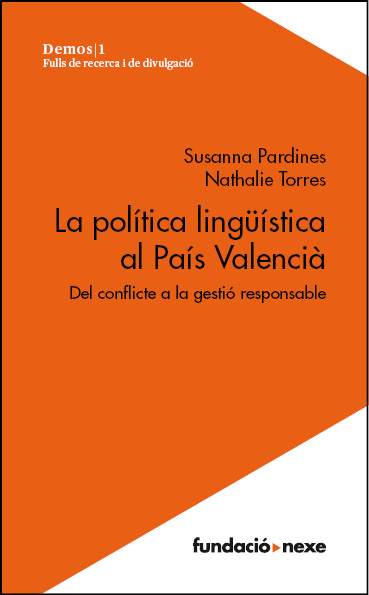
Fundació Nexe – “La política lingüística al País Valencià”, de Susanna Pardines i Nathalie Torres

Fundació Nexe – La política lingüística al País Valencià, de Susanna Pardines i Nathalie Torres.

Aquest treball aborda la qüestió lingüística valenciana des d’una perspectiva crítica amb les polítiques lingüístiques dutes a terme pels successius governs autonòmics, i insisteix en la necessitat de posar en pràctica noves polítiques lingüístiques que deixen enrere l’enfrontament i cerquen el benestar dels valencianoparlants.

Susanna Pardines és llicenciada en Filologia Hispànica-Secció de Filologia Valenciana per la Universitat de València-Estudi General. Treballa com a tècnica lingüística en l’administració autonòmica. És sòcia de l’ACV Tirant lo Blanc i patrona de la Fundació Nexe.

Nathalie Torres és llicenciada en Filologia Hispànica-Secció de Filologia Valenciana per la Universitat de València-Estudi General. Treballa com a tècnica lingüística en l’administració local. És sòcia fundadora de l’ACV Tirant lo Blanc i patrona de la Fundació Nexe.

Descarregueu el llibre en versió pdf o adquiriu-lo en paper ací.

A la premsa:
Levante, 26/11/2011: En busca de una política para frenar el ‘lingüicidio’

Títol: La política lingüística al País Valencià. Del conflicte a la gestió responsable.
Autors: Susanna Pardines i Nathalie Torres.
Fundació Nexe, 2011. 82 pàg.
Demos, 1.
ISBN: 978–84–938315–4–7.

Workshop: “El català, llengua mitjana. Una perspectiva jurídica”

Challenges for medium-sized language communities in the global era: a juridical perspective
Coordinador: Antoni Milian (Universitat Autònoma de Barcelona)

En l’era de la mundialització, el català és una llengua mitjana amenaçada per les llengües internacionals: el castellà i l’anglès, particularment. En aquesta jornada volem saber quines són les amenaces que pateixen altres llengües mitjanes (o en posició de llengua mitjana: el cas del francès al Canadà) davant de la mundialització, com també volem saber quines són les mesures que s’adopten per salvaguardar-les.

Programa

9.30h
Presentació de la jornada: Antoni Milian

10h
El cas del francès al Quebec. Amenaces i reptes interns — Andre Bräen, Université d’Ottawa (Universitat d’Otawa)

11h
El cas del francès al Quebec. Amenaces i reptes de la mundialització (ALCA/NAFTA, OMC) — José Woehrling, Université de Montreal (Universitat de Montreal)

12h
Pausa- cafè

12.30h
El cas de l’estonià a Estònia. Amenaces i reptes davant l’anglès i la minoria russòfona — Mart Rannut, Tallin Ülikool (Universitat de Tallin)

13.30h
Les llengües mitjanes en els mitjans de comunicació. Protecció enfront de l’anglès i altres llengües internacionals — Iñigo Urrutia, Universidad del País Vasco/ Euskal Herriko Unibertsitatea

Detalls del workshop:
Data: Divendres,18 de novembre de 2011
Lloc: Sala de Graus, Facultat de Filologia (UB)
Contacte: Vanessa Bretxa (vanessa.bretxa@ub.edu)

“Saving endangered languages through public service broadcasting”. By Levi Obijiofor

In June 2010, I was requested by the United Nations Educational, Scientific and Cultural Organisation (UNESCO) head office in Paris, France, to ualtndertake a study of public service broadcasting and language development in five countries selected from five regions across the world. Part of the brief was that the project had to be completed three months from the date the contract was signed. Given my teaching, research and service commitments in my university, the assignment, in particular the deadline for submission of the final report appeared daunting. It was not just the final report that proved to be a challenge. I was also required to include two separate reports (in addition to the final report), namely a critical summary of the situation in the five countries and key recommendations based on the final report.

Five countries were selected for the study, after consultations with UNESCO. The countries were South Africa (representing the African region), India (representing Asia and the Pacific), Canada (representing North America and Europe), Jamaica (representing the Caribbean and Latin America) and Lebanon (representing the Arab states). Unfortunately, Nigeria did not make the list because she has mostly state broadcasting organisations, apart from privately owned commercial broadcasting institutions. None of the broadcasting organisations in Nigeria could be strictly regarded as a public service broadcaster. To be clear, the study did not include public service broadcasting undertaken by non-governmental organisations, civil society groups or community organisations.

The project represented UNESCO’s commitment to the promotion of multilingualism and the protection of minority or lesser used languages that are facing extinction. Part of the terms of reference stated that the “the main objective of the paper is to analyse how public-service broadcasters (PSB) deal with linguistic issues in selected five countries (two major criteria: (i) any language revitalisation initiatives identified in a country (from vulnerable to severely endangered); and (ii) any practice in a country including a language previously not used by the public service media in the programming…”

Eleven key questions were identified by UNESCO to be investigated in the study. Three of the questions included an investigation of how public service broadcasters “cover linguistic communities as target audience and reflect its subjects, ensure diversity of genres of programming”; and an examination of how the public service broadcasters “make decisions on which of the languages should be included, in case of presence of several (official-national) languages”. The third question was to explore how “public service broadcasters enable linguistic communities to be informed, educated and entertained”.

The project appealed to me essentially because public service broadcasting is one important vehicle for the development, promotion and sustenance of lesser used languages in the world. As various scholars have pointed out, public service broadcasting is a very important institution that serves different objectives in different societies. In its ideal form, public service broadcasting caters for the diverse needs of audiences of different socioeconomic backgrounds. It is founded on the principle of universal access to information. Public service broadcasting is seen as essential for the development of a strong and participatory democracy.

Today, I provide just a brief account of the situation in South Africa and Canada. A summary report concerning the other three countries will be provided in subsequent essays. In general, the study found that some countries have different policy or legal or constitutional frameworks that support the use of public service broadcasting for the promotion of lesser used languages (e.g. South Africa and Canada), while some countries (e.g. India) have policy guidelines with no enforcement mechanisms to ensure the public service broadcaster actually engages in the development of lesser used languages.

Still, there are countries (such as Jamaica) that have a public service broadcaster but with no clear guidelines in terms of policy or legal framework that will compel the public service broadcaster to promote lesser used languages. Paradoxically, it is in this environment that public service broadcasting is seen as offering universal access to information and as an important institution for the growth of participatory communication and civic deliberation in the public sphere.

Of the five countries, South Africa stands out as an interesting case because it is pursuing a deliberate policy of using public service broadcasting to develop and promote its official languages. In South Africa, there are 11 officially recognised languages. South Africa’s proactive approach to the use of public service broadcasting to promote languages in the country is backed up by two major instruments — constitutional recognition of 11 official languages; and the existence of policy frameworks that mandate the South African Broadcasting Corporation (SABC) in its charter to reflect all 11 official languages in its programming in an equitable manner. These imply that, unlike many countries across the world, South Africa’s constitution acknowledges the multilingual and multicultural composition of the country’s population.

There are various strategies that are adopted by the SABC to reflect the country’s official languages in its programming. However, owing to space constraints, these cannot be outlined here. But there are also several challenges that arise from the SABC’s broadcasting in multiple languages in South Africa. First, the recognition of 11 official languages in the South African constitution underplays the fact that there are more than 24 languages that are spoken in the country. The constitution is silent on the status of these other languages. What, for example, will happen to the unofficial languages of South Africa? What about the people who speak those languages? Are they no longer the citizens of South Africa? Should their languages be allowed to disappear?

The recognition of 11 official languages in South Africa is based on the principle that they are the languages spoken by a majority of South Africans. Fair enough! But minority languages should not be allowed to die simply because they are spoken by minority members of the population. Some kind of mechanism must be devised to protect minority or lesser used languages. Language is a symbol of identity and no language deserves to be allowed to go into extinction.

The situation in Canada is slightly different. The Canadian Broadcasting Corporation (CBC) is the leading public service broadcaster. The Broadcasting Act of 1991 mandates the CBC to broadcast in English and French. However, the CBC runs a service that delivers native language programmes to people in the far North. Apart from the CBC and other public broadcasters, the Aboriginal People’s Television Network (APTN) also provides services in Indigenous languages.

The APTN, which was established in September 1999, broadcasts 56 per cent of its programmes in English, 16 per cent in French, and 28 per cent in 15 Aboriginal languages. This suggests that the APTN aims to reflect in its programming the diversity of languages inCanada. By broadcasting in Aboriginal languages, the APTN contributes to the development and sustenance of Canada’s Indigenous languages. However, for a television organisation that is committed to broadcasting to Indigenous people in Indigenous languages, the percentage of time devoted by the APTN to broadcasting in Aboriginal languages is grossly inadequate

One problem that confronts public service broadcasting both in South Africa and Canada is funding. In Canada, there are three main sources of funding available to the CBC. These are parliamentary appropriations, advertising and other sundry sources. In South Africa, the SABC’s mandate authorises the broadcaster to raise revenue through advertisements, subscription, sponsorship and licence fees. For this reason, South Africa’s Ruth Teer-Tomaselli points out that the SABC, as a public service broadcaster, “operates in a commercial environment, under commercial constraints”.

Concerns must be expressed about the impact that advertising and other market forces might have on the quality and diversity of programmes broadcast by the CBC and the SABC. Commercialisation of media is a sensitive subject of debate essentially because of concerns that a public service broadcaster that engages in the pursuit of advertising revenue would compromise its public service obligations. As Robert Picard, author of several works on media commercialisation has argued, when media organisations place greater emphasis on profit rather than on public interests, quality journalism is undermined.

The debate over an acceptable mechanism for funding public service broadcasting has raged for years and there is no indication the uproar is likely to end soon. While there is a general view that government should not be involved in the funding of public broadcasting in order to guarantee editorial independence, there is also the idea that public broadcasters must be shielded from market forces that tend to distract attention from quality journalism. It is a Catch-22 situation.

II

IN the first part of this article published on July 1, 2011 (see “Saving endangered languages through public service broadcasting”), I examined how public service broadcasting is being used to save endangered languages in South Africa and Canada. The article was a synopsis of a study commissioned by UNESCO in 2010, which required me to investigate public service broadcasting and language development in five countries. The five countries covered in the study were South Africa, Canada, India, Jamaica and Lebanon. The final report was submitted to UNESCO in January this year.
For over three days in May/June 2011, UNESCO hosted a meeting at its Paris headquarters in which a group of experts reflected on and examined how best to save endangered languages through public service broadcasting. The theme of the meeting was “Towards UNESCO guidelines on language policies: A tool for language assessment and planning.” More than 50 linguists, communication scholars and specialists in related disciplines attended the meeting.

Since the publication of the first part of the article in July, my attention has been distracted by a number of news events that prevented a follow up. Today, I focus on the second part of the report which analyses public service broadcasting and language development in India and Jamaica. I have included in this part some recommendations. The final part of the report, comprising mostly of suggestions, will be published as and when time and events permit.

There are two principal public service broadcasters in India. They are Doordashan and All India Radio (AIR). Statistics published by the All India Radio show that the broadcaster has 232 broadcasting centres, including domestic and external services. Its domestic services broadcast in 24 languages and 146 dialects while the external arm broadcasts in 27 languages. The broadcaster produces on a daily basis more than 500 news bulletins in 82 languages. These are broadcast from its head office in New Delhi as well as from 44 regional services. However, Doordarshan broadcasts from 24 regional news services at three levels, namely national, regional and local.

India presents an interesting scenario because it has a large number of languages. Usha Manchanda reports that India is not only the second most populous country in the world, its population is also diverse in terms of the composition of religious groups, social classes and language groups. According to Census of India 2001, India has 22 officially recognised languages and a large number of dialects, although Hindi is a widely spoken language. This situation makes public service broadcasting an important instrument for the promotion of minority languages in India.

In India, the only policy initiative that mandates the two public service broadcasters to promote minority or lesser-used languages in their programming is the Prasar Bharati Act 1990. However, there is no mechanism in this Act to ensure that Doordashan and AIR use, as a matter of policy, minority languages in their programming. There is also no clause in the Prasar Bharati Act 1990 that stipulates how the broadcasters would be sanctioned if they failed to uphold their public service obligations in regard to minority language promotion and development.

The Prasar Bharati Act 1990 sets out the basis for the recognition and development of diverse languages in the country. The Act states quite categorically the goals of the Prasar Bharati Board some of which include “providing adequate coverage to the diverse cultures and languages of the various regions of the country by broadcasting appropriate programmes; providing suitable programmes keeping in view the special needs of the minorities and tribal communities; promoting national integration by broadcasting in a manner that facilitates communication in the languages of India; and facilitating the distribution of regional broadcasting services in every State in the languages of that State” (Prasar Bharati Act 1990). The extent to which these goals have been met or are being implemented is contested.

In Jamaica, public service broadcasting is regarded as a tentative and emerging broadcast sector and this is seen in terms of inadequate funds provided to the public broadcaster – the Public Broadcasting Corporation of Jamaica (PBCJ) – and the Creative Production and Training Centre (CPTC), now mainly self-sustaining. There is no specific mandate or constitutional clause that requires the PBCJ to reflect lesser-used languages in its programming. This means the use of public service broadcasting for language development is not yet seen as a priority in Jamaica. For many years, public service broadcasting in Jamaica has been hampered by a range of problems such as under funding, importation of foreign programmes, lack of quality programmes, and political interference.

This is understandable because, following its independence in 1962, Jamaica was faced with a multitude of problems not least of which is a broadcast industry that relied essentially on imported programmes. Thus, in fashioning its public service broadcasting policy, Jamaica is confronted with the problem of how to promote and sustain its cultural identity through television programming. The impact of imported television programmes on the culture and people of the Caribbean is at the heart of the campaign to establish public service broadcasting in Jamaica. Thus, the institutionalisation of public service broadcasting is important to Jamaica because it will serve a variety of local cultural, economic, social and political interests. In particular, it will help to develop local performing artistes and local cultural programmes.

The question about how the Jamaican public service broadcaster enables linguistic communities to be informed, educated and entertained shows there are no clear distinctions among linguistic communities in the country, even though the PBCJ covers folk forms such as poetry and drama that involve use of the local language. There are some initiatives to expose and recognise the Jamaican language through broadcasting. One such scheme is the National Festival Movement. There are also other initiatives, originating mainly from the University of the West Indies, around recognition and respect for Jamaican, an extensively used combination of English, West African linguistic forms and Spanish.

In terms of recommendations aimed to initiate or advance the use of public service broadcasting for the development of minority languages in different countries, one important element is the establishment of an effective public service broadcaster (radio and television) that caters for the diverse needs of the citizens in any country in which such a service is either non-existent or is of limited use.

Public service broadcasters fulfil certain obligations to citizens such as provision of universal access, cultural preservation, promotion of national unity, democratisation of information and civic deliberation by citizens. The presence of public service broadcasters will offer a level playing field that provides everyone – the rich and the poor, majorities and minorities, women and men, the elderly and the young – equal access to broadcasting services.

The establishment of a public service broadcaster should be backed up by clear policy guidelines that mandate the broadcaster to fulfil a number of obligations, including the promotion and development of minority languages through a range of programmes. As discussed in the first part of this essay published in July, South Africa and Canada serve as good case studies of countries in which public service broadcasters are mandated through policy to promote and develop officially recognised languages as well as other minority languages. However, it is not enough to outline policy goals relating to public service broadcasting and language development. Clear, specific and achievable goals must be set, including how the goals should be assessed.

It is vital for each country to establish an official regulator of all forms of broadcasting. The key responsibility of this regulator is to ensure that broadcasting organisations meet certain mandates, such as an obligation to broadcast in minority languages for a specified number of hours per week during peak hours. Such broadcasts should not be limited to language programs but must also be reflected in news and current affairs programming, documentaries, educational broadcasts (especially educational programmes targeted at pre-school age children, as well as primary and secondary school children). Other programmes through which minority languages should be promoted include sports and other forms of entertainment (e.g. drama, soap operas, etc.).

To facilitate effective use of public service broadcasting for language development, one of the conditions for the issuance of broadcast licences must be that licence holders should be required to broadcast in minority languages for a specified number of hours per week during peak and off-peak hours.

In multiethnic and multilingual countries such as India, South Africa and Jamaica, a national language policy should be used to outline the official languages of communication in the public and private domains. Such a policy should recognise minority languages. It should map official channels (such as public service broadcast institutions) through which the minority languages should be promoted and developed. The development, preservation and maintenance of minority languages should be one of the key objectives of a national language policy.

For language policy initiatives to be effective, as in the case of South Africa, it may be necessary to consider whether there needs to be some kind of legal framework or constitutional clause that identifies officially recognised languages, as well as the lesser-used languages. The key question to be considered here is whether a legal framework is required to specify how minority or lesser-used languages should be supported and maintained through various public channels.

In essence, policy frameworks for public service broadcasting might be more effective if they have legal backing or, in some countries’ situations, constitutional backing and mandate. South Africa serves as an example of a country in which the public service broadcaster (SABC) is mandated in the constitution to promote 11 officially recognised languages.

Publicat a The Guardian Nigeria, els dies 1 de juliol i 11 de novembre del 2011.

Levi  Obijiofor is a Senior Lecturer in Journalism at the School of Journalism and Communication, The University of Queensland, Brisbane, Australia. He was at various times Sub-Editor, Production Editor and Night Editor of The Guardian newspapers in Lagos, Nigeria. Between March 1995 and May 1996, he worked in the Division of Studies and Programming (BPE/BP) at the Paris headquarters of UNESCO where he edited the bulletin FUTURESCO and also coordinated the future-oriented studies program.


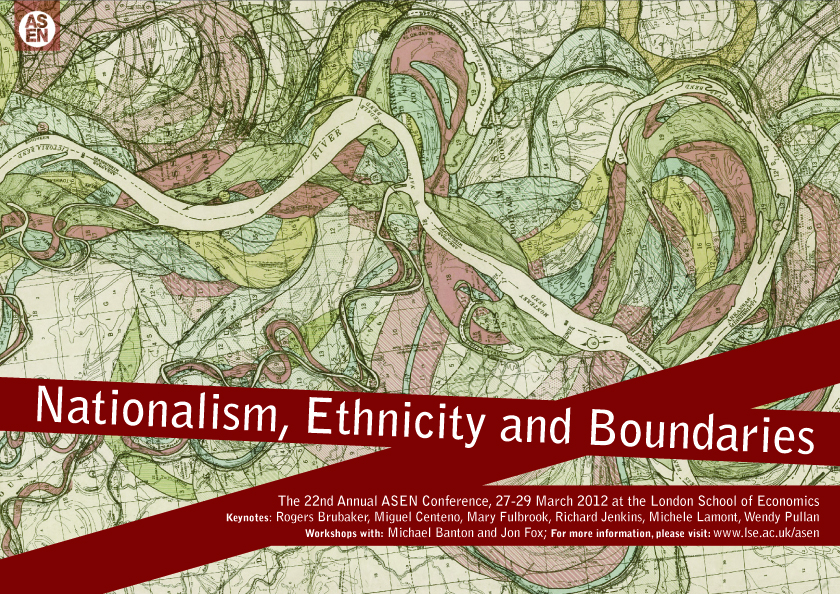
“Nationalism, Ethnicity and Boundaries”. La 22a. Trobada anual de l’ASEN

The Association for the Study of Ethnicity and Nationalism (ASEN) is holding its 22nd Annual Conference, Nationalism, Ethnicity and Boundaries, 27-29 March, 2012 at the LSE.

Nationalism represents and advocates for the nation as a special group within humankind; it demands a distinct place for the nation in the world, a territory: the national homeland. With modern nation-state formation the drawing and enforcement of boundaries has become an elaborate part of international relations. Disputes arising from claims over boundaries both originate and intensify nationalist assertions and actions in pursuit of such claims. One central concern of this conference is the origins, formulation, pursuit, enforcement and conflicts related to national boundaries.

The drawing of physical boundaries is but one aspect of a deeper sense of national boundary making. The national self only makes sense set against the non-national other. The second thrust of the conference is social and symbolic boundaries. Citizenship rules, symbolic representations of the national, practices of discrimination highlight and enforce many kinds of boundaries which often cut across the physical boundaries of nation-states and national homelands. Often, these boundaries are forged inadvertently from the bottom-up through the everyday practices of, and interactions between individuals.

A third focus-point of the conference is the fluidity of boundaries. There are many non- national boundaries which may not align with those of nation and ethnicity. Boundaries are fluid and what at one time is a boundary which gives rise to fierce conflict can at another time either be forgotten or transformed into a site of agreement and reconciliation.

These are important issues in the fields of ethnicity and nationalism, and although there is a large and recent literature on border and boundary issues, the work to date remains disconnected and under-theorised. The conference offers an opportunity for academics to share and discuss the most recent scholarship in this emerging area of study in the fields of ethnicity and nationalism. The three-day conference will explore historical, contemporary and policy related aspects of these various interrelated issues while focusing on the dichotomy between physical and symbolic boundaries and their interactions.

Confirmed keynote speakers include: Rogers Burbaker, Miguel Centeno, Mary Fulbrook, Richard Jenkins, Michele Lamont, and Wendy Pullan. There will also be workshops with Jon Fox and Michael Banton.

CALL FOR PAPERS

Proposals are invited for papers focusing on the following themes:

Partition, sucession and irredentism
The legality of boundaries and citizenship rules
Boundary surveillance and enforcement
Border controls, passports and identity documents
Territorial and non-territorial sub-national claims
Social and sybmolic boundaries and everday practices
Symbolic boundaries and identity formation
The mechanisms of boundary formation, transgression and change
Interactions between physical and symbolic boundaries

Abstracts should be submitted online no later than November 6, 2011.

To submit your abstract, please follow this link: http://www2.lse.ac.uk/researchAndExpertise/units/ASEN/Conference/Abstract.aspx Sucessful submissions will be announced in December, 2011.